
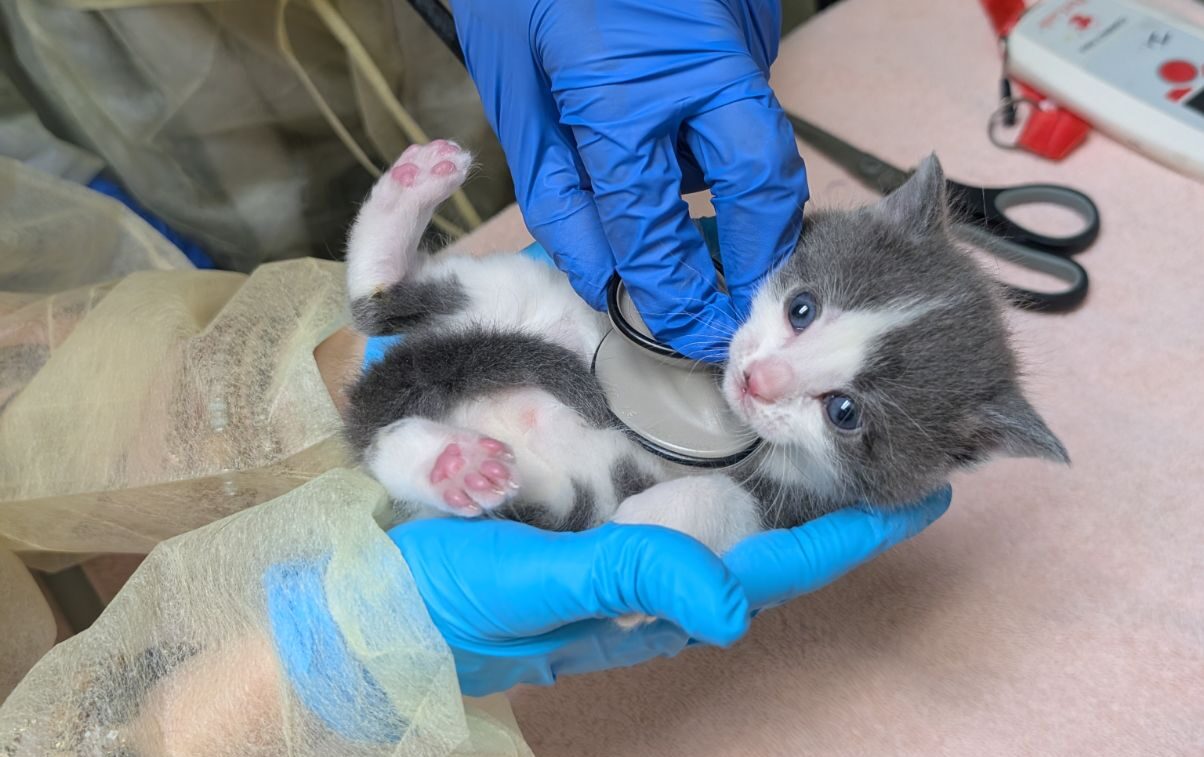
Every spring, animal shelters prepare for kitten season, the time of year when an influx of newborn litters arrive. Though kittens are small, they often require a large portion of shelter resources, from medical care and supplies to staff and foster time. At CCS, we’re known for taking in cats of all ages who might not have a chance anywhere else due to complex medical conditions or other special needs. Kitten season is no exception.
Warmer Weather = Longer Kitten Season
Traditionally, cats reproduce when days lengthen and temperatures rise. But in recent years, shelters across the country have observed kitten season starting earlier and lasting longer. Milder winter temperatures are increasingly being viewed as a primary cause for several reasons. When winters are less harsh, more cats survive—and they begin reproducing sooner. Increased access to food and shelter during warmer conditions also supports higher survival rates for kittens. Additionally, warmer winters boost kitten visibility by drawing more people outdoors, leading to more kittens being noticed and brought to shelters.
All of this results in a longer breeding window, more litters being born, and more kittens arriving at shelters. And because cats can have multiple litters in a single season, the population growth can quickly become overwhelming.
The Fragility of Kittens
Kittens have underdeveloped immune systems and gastrointestinal tracts, making them highly susceptible to contagious illnesses. Kittens from the same litter are housed together, which means even a minor illness can quickly spread, requiring intensive medical care, isolation protocols, and round-the-clock monitoring.
Beyond this, caring for neonatal kittens (0 to 4 weeks old) that do not have their mother present adds another layer of complexity. These kittens require bottle feeding every few hours, temperature regulation, and constant supervision to ensure their safety and wellbeing. Additionally, the most critical socialization period for a cat is from 2-9 weeks of age, and frequent contact with humans during this time plays a key role in shaping a kitten’s friendliness, trust, and ability to bond with people.
The Strain on Shelter Resources
Kitten season doesn’t just increase the number of cats in care—it also multiplies the demands on every part of a shelter’s operation, including:
- Increased medical costs for vulnerable kittens
- Greater need for specialized supplies, such as formula, heating pads, and personal protective equipment (PPE)
- Significant staff and volunteer time dedicated to feeding, cleaning, and monitoring
- Expanded foster networks to relieve overcrowding and provide more intensive care
The overall financial impact is substantial, especially since kittens must stay in care until they’re old enough for adoption. In 2025, Cat Care Society spent a significant amount caring for more than 350 kittens. This included over $7,000 on personal protective equipment (PPE) alone, such as disposable gloves, gowns, shoe covers, and face protection. While not a glamorous expense, PPE is critical for protecting vulnerable kittens and preventing the spread of contagious illness.
Beyond the financial strain, kitten season also takes an emotional toll on staff and volunteers. The constant influx of fragile animals, combined with often high-stakes, urgent care they require, can often be overwhelming. Ensuring consistent access to necessary supplies and PPE helps ease this pressure, allowing caregivers to focus fully on the kittens and feel confident they have everything they need to give them the best possible care. That peace of mind makes a real difference, helping reduce stress and minimize fatigue during one of the busiest and most demanding times of the year.
Why Spaying and Neutering Is Critical
One of the most effective ways to curb this cycle is through spaying and neutering both pet cats as well as community cats living in colonies. Without intervention, unspayed female cats can go into heat every few weeks during breeding season, producing litter after litter. In addition to population control, spaying and neutering provides cats with health and behavioral benefits making it a practical and caring solution.
Being proactive with spay and neuter efforts is essential for keeping cat populations manageable, which is why Colorado has enacted both state and local legislation to address the issue. All Colorado shelters are required to spay and neuter the cats in their care before adoption (Cat Care Society performed 393 spay/neuter surgeries in FY2025!). If the procedure must be postponed due to health or age, a written agreement must be made to ensure it is completed at a later date. In Denver, all cats over six months old must be spayed or neutered unless the owner obtains an annual permit to keep their cat unaltered.
Trap-Neuter-Return (TNR) is a humane way to trap feral cats, spaying or neutering them, and returning them to their outdoor homes, TNR prevents future litters from being born. TNR doesn’t just reduce the number of kittens entering shelters—it also improves the health of cat colonies and reduces the strain on already overwhelmed systems. Read more about TNR in one of our other blog posts and check out our list of TNR organizations that provide services in the Denver metro area if you’d like to get involved or need support.
Make a Difference This Kitten Season
Throughout the month of May, we’re running a dedicated campaign to help cover the costs of medical treatment, supplies, and nutrition that come with kitten season. With your support, we aim to raise $10,000 to help as many kittens as possible receive the care they need to thrive.
We also maintain registries on Amazon and Chewy where anyone can shop and donate critical supplies like kitten formula, bottles, heating pads, blankets, cleaning supplies, disinfectants, and more.
Supporting TNR programs, fostering kittens, spreading awareness, ensuring your current pets are spayed or neutered, and adopting from shelters are also key ways our community can help reduce the impact of kitten season.
Closing
Kitten season will always be inevitable to some degree, which is why CCS is always looking at ways to make it less overwhelming while maintaining our high standards of care. With proactive strategies, community support, and continued education, we can help create a future where fewer kittens are born into crisis—and more have the chance to thrive.
About the Author: Beth Dokolasa is a volunteer for Cat Care Society and serves on the Board of Directors. She is an instructional developer for Natural Grocers and lives in Indian Hills, Colo., with her husband, daughter, and two cats, Techno and Digit.